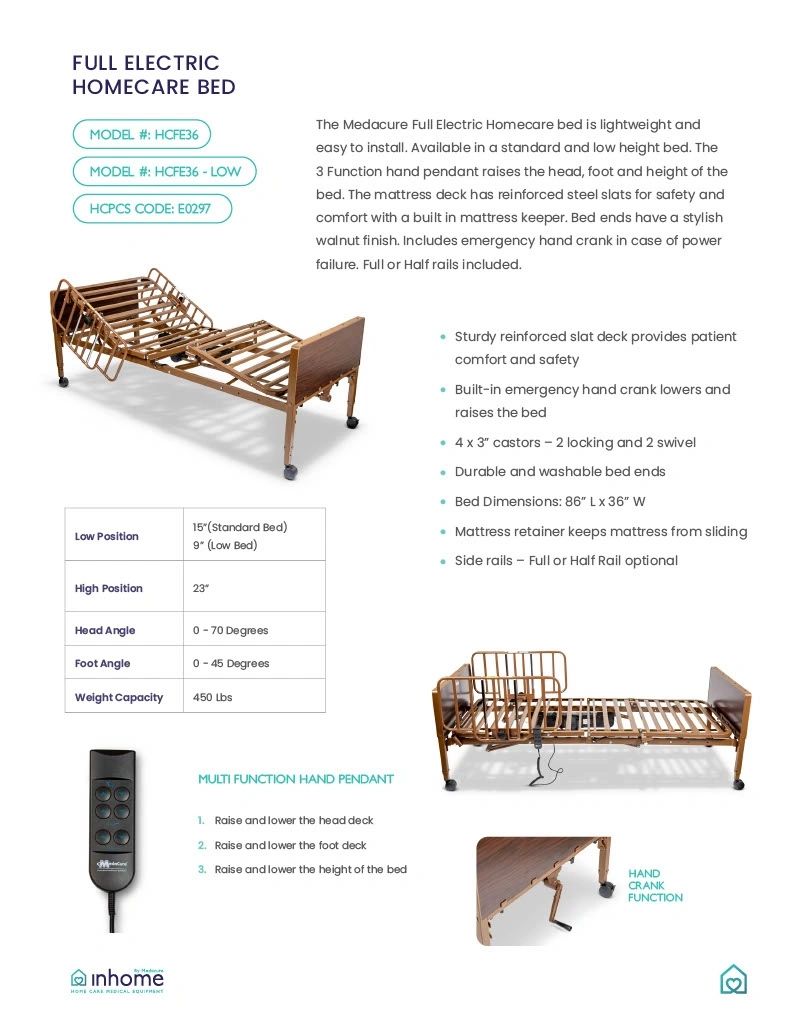
When it comes to a hospital bed rental, one of the most important decisions is choosing the right type of bed for the patient’s needs. There are two primary options to consider: the full electric hospital bed and the semi-electric hospital bed. Both offer adjustable features that enhance comfort and care, but there are key differences between the two. In this blog, we’ll explore when it’s beneficial to choose a full electric hospital bed instead of a semi-electric one, helping you make an informed decision based on the patient’s medical condition, mobility, and level of care required.
1. For Patients with Limited Mobility
A full electric hospital bed is especially beneficial for patients who have limited mobility or need extensive assistance with repositioning. Unlike a semi-electric bed, which allows for electric adjustment of the head and foot sections but requires manual adjustment of the bed’s height, a full electric hospital bed allows for both the head, foot, and bed height to be adjusted electronically.
For patients who are bedridden or have significant difficulty moving, having a fully adjustable bed can greatly improve their comfort and prevent complications like pressure sores. With the press of a button, caregivers can easily reposition the patient, adjust the bed’s height for easier transfers, and provide the patient with a more comfortable sleeping position without physical strain.
If your loved one or the patient requires frequent repositioning or has special positioning needs due to their condition, a full electric hospital bed is a great choice.
2. For Caregivers Who Need Convenience and Ease of Use
Caregivers often face physical challenges when assisting patients who are bedridden or have limited mobility. A full electric hospital bed is the ideal choice when caregivers need convenience and ease of use. Because all adjustments are made electronically, caregivers can adjust the bed’s height, footrest, and headrest without having to physically strain or manually reposition the patient.
For caregivers who have to lift or reposition patients frequently, the ability to adjust the bed’s height at the push of a button can make a huge difference. It can reduce the physical demands placed on the caregiver and prevent injury. This ease of use is particularly beneficial for patients who need frequent adjustments throughout the day and night.
In situations where the caregiver’s own health or physical limitations are a concern, a full electric bed can make caregiving much easier and less physically demanding.
3. For Patients Who Need Frequent Positioning Changes
Patients who suffer from certain conditions such as respiratory issues, pressure ulcers (bed sores), or circulatory problems often need to be repositioned frequently. A full electric hospital bed allows for effortless adjustments to the bed’s head, foot, and height positions, making it easier to meet the patient’s specific medical needs.
For example, patients with respiratory conditions such as COPD or asthma may benefit from being propped up at an angle to improve breathing. A full electric bed allows for precise adjustments to the head of the bed, ensuring the patient can maintain an optimal position without discomfort. Similarly, patients who are at risk of developing pressure sores require frequent repositioning to reduce pressure on certain areas of the body. The ability to adjust the bed electronically provides quick and easy solutions to both of these issues.
If the patient’s condition requires constant or frequent repositioning, the full electric hospital bed will offer far more convenience and flexibility than a semi-electric option.
4. For Patients Who Need a Higher Degree of Customization
Some patients have complex medical needs that require a higher level of customization and care. A full electric hospital bed offers a greater degree of adjustability than a semi-electric bed, which means it can accommodate a wider range of specific patient needs. With full electric beds, caregivers can not only raise and lower the head and foot of the bed, but they can also adjust the overall height of the bed itself.
For example, for patients with severe edema or swelling in the legs, elevating the foot section of the bed can help alleviate discomfort. Similarly, raising the bed’s height can assist with easier transfers, allowing patients to get in and out of bed with greater ease. The ability to adjust these features independently can be especially helpful for patients who need a personalized care plan.
If a patient requires a high degree of customization, a full electric hospital bed is likely to provide the best support.
5. For Long-Term Home Care
A hospital bed rental with full electric functionality is a good choice for long-term care needs. If the patient is expected to remain in bed for an extended period, such as those with chronic illnesses or disabilities, the convenience and comfort of a full electric hospital bed can significantly improve their quality of life.
Since the patient will likely require frequent adjustments to their position over time, the ease of electronically adjusting the head, foot, and height of the bed will ensure that caregivers can meet the patient’s needs more efficiently. Over a long-term care period, the increased convenience and comfort for both the patient and caregiver will outweigh the additional cost of a full electric bed.
6. For Patients with Multiple Health Conditions
Patients who have multiple health issues, such as heart disease, respiratory problems, or mobility limitations, can benefit from the versatility of a full electric hospital bed. These patients may require various adjustments throughout the day to manage their symptoms and ensure their comfort. A full electric hospital bed provides the flexibility to cater to all of these needs with minimal effort from both the patient and the caregiver.
For example, for a patient with both heart and respiratory conditions, adjusting the head of the bed to a semi-sitting position can relieve pressure on the lungs and improve breathing. Meanwhile, a patient with circulatory problems may require frequent elevation of the legs, which can be easily accomplished with a full electric bed. The more complex the health conditions, the greater the need for a fully adjustable bed to provide optimal care.
Conclusion: The Benefits of Full Electric Beds for Specialized Care
Choosing a hospital bed rental that best meets the needs of the patient is essential for ensuring comfort, safety, and ease of care. While both full electric and semi-electric hospital beds offer valuable features, the full electric hospital bed shines in situations where greater customization, ease of use, and frequent repositioning are required.
For patients with limited mobility, complex medical needs, or those in long-term home care, a full electric bed can significantly improve both the quality of care and the quality of life. Whether you are caring for a loved one at home or are working with a professional caregiver, the flexibility and convenience of a full electric hospital bed will provide both patients and caregivers with a higher level of comfort, safety, and efficiency.
Before making a decision, be sure to discuss the specific needs of the patient with a healthcare provider or hospital bed rental company. This way, you can ensure that you select the bed that will offer the best support for the patient’s individual care plan.
Share this post: