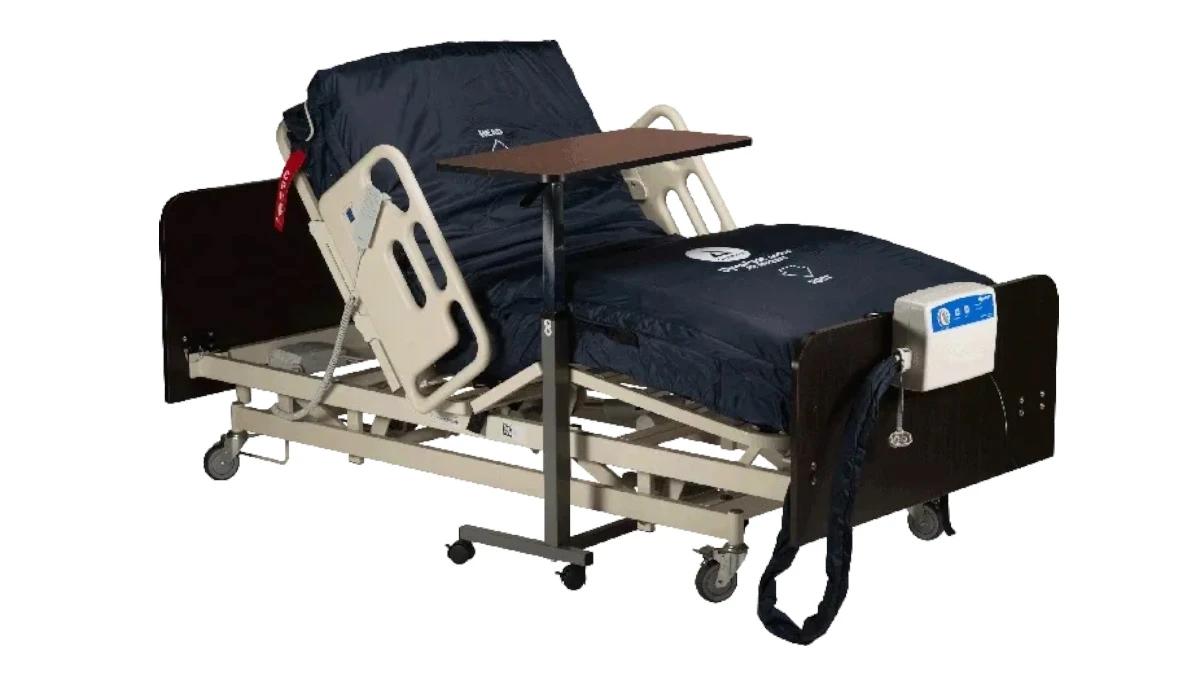
Which Is Right for Your Needs?
Hospital beds are designed to improve comfort, safety, and accessibility for patients who require extended bed rest or medical care at home or in a healthcare facility. Among the most common options are semi-electric and full-electric hospital beds. Understanding the differences between them—and knowing when each type is most appropriate—can help patients, caregivers, and healthcare professionals make the best choice for recovery and long-term care.
Understanding the Basics
Semi-Electric Hospital Beds
A semi-electric bed uses electric motors to adjust the head and foot sections, allowing the patient or caregiver to raise or lower these parts with a simple handheld control. However, the height of the entire bed frame (raising or lowering the whole bed) must be adjusted manually, typically with a hand crank.
Key Features:
- Electrically adjustable head and foot positions
- Manual height adjustment
- Usually less expensive than full-electric models
- Requires some caregiver effort for height changes
Full-Electric Hospital Beds
A full-electric bed offers motorized control for all major adjustments—including head, foot, and bed height. All movements can be controlled using a remote, minimizing physical effort from caregivers.
Key Features:
- Fully motorized control (head, foot, and height)
- Easier repositioning and transfers
- Ideal for patients with limited mobility
- Higher cost but greater convenience and safety
When to Use a Semi-Electric Hospital Bed
Semi-electric hospital beds are often recommended when cost, simplicity, and occasional caregiver assistance are acceptable. They work well in situations such as:
- Short-term recovery after surgery or illness: When a patient is expected to regain mobility in a few weeks or months, a semi-electric bed offers comfort and position control without the expense of a full-electric model.
- Patients with partial mobility: Individuals who can assist in their own repositioning but need occasional help benefit from the adjustable head and foot sections.
- Care settings with caregiver support: If a family member or caregiver is consistently available to adjust the bed height manually, the limited electric control is usually not an issue.
- Budget-conscious home care: Semi-electric beds provide a good balance between comfort and affordability, especially for short-term rentals or home recovery.
When to Use a Full-Electric Hospital Bed
Full-electric beds are best for patients with limited mobility, chronic illness, or long-term care needs. Their ease of use and precise adjustability make them ideal for:
- Patients with severe mobility limitations or paralysis: The fully motorized design allows for repositioning without physical strain, reducing the risk of pressure ulcers and improving comfort.
- Individuals requiring frequent repositioning: Those with respiratory or circulatory conditions often need frequent head elevation or position changes, which are easily managed with a full-electric bed.
- Elderly or frail patients living alone: When caregiver support is limited, the patient can adjust their position independently using the remote control.
- Long-term or palliative care: For patients who spend most or all of their time in bed, a full-electric model provides consistent comfort and safety, especially for transfers to wheelchairs or commodes.
- Professional or high-demand home healthcare environments: Full-electric beds are standard in nursing homes and advanced home care setups where patient handling efficiency and safety are priorities.
Choosing the Right Bed
The right hospital bed depends on the patient’s medical condition, level of mobility, and caregiving support:
- Choose a semi-electric hospital bed if the patient needs moderate assistance, has some mobility, or is recovering short-term with caregiver help available.
- Choose a full-electric hospital bed for patients who are largely immobile, need frequent repositioning, or require long-term or independent care.
Share this post: